

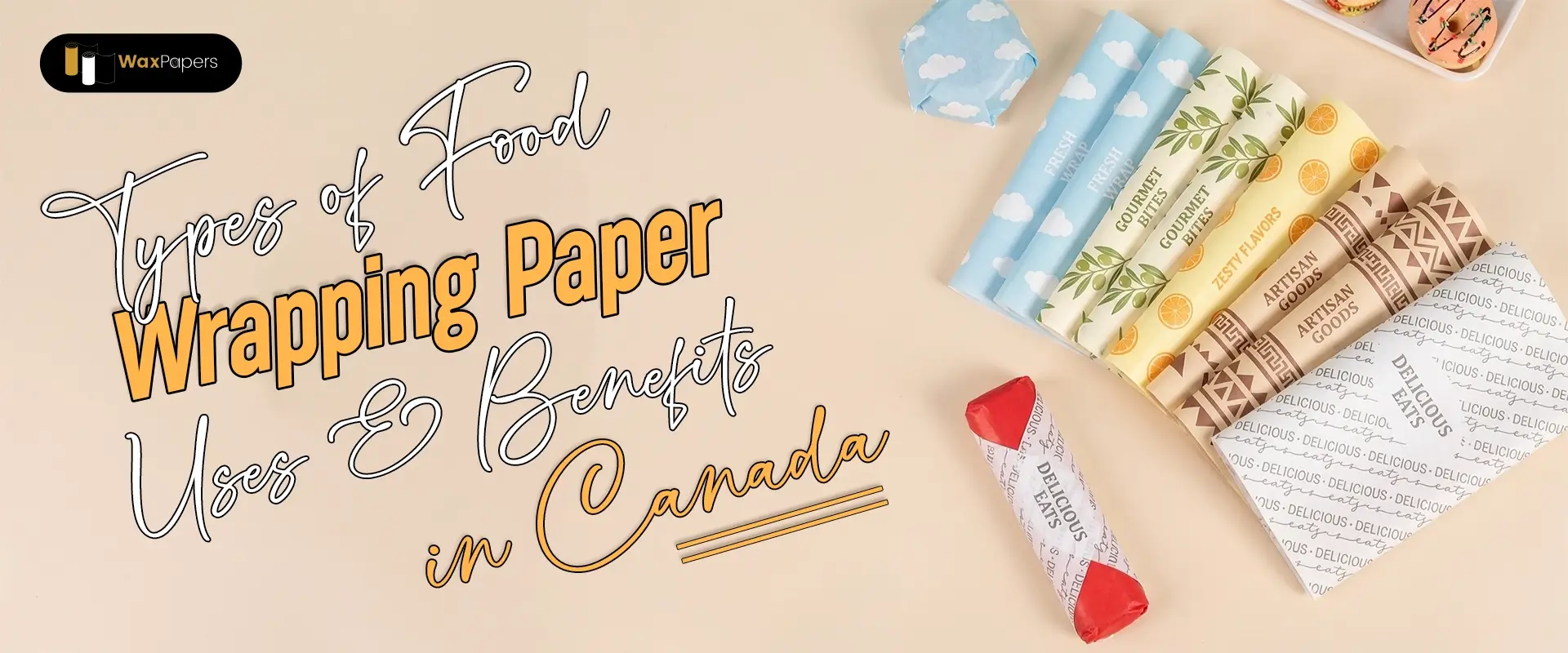
Types of Food Wrapping Paper: Uses & Benefits in Canada
August 28, 2026 Explore Blogs
Food wrapping paper in Canada is just a sheet of paper used to hold and cover food. It goes between the food and your hands or the counter or the delivery bag. Restaurants and bakeries use it every day to wrap sandwiches, burgers and baked goods before handing them over.
Not every sheet does the same job, though. Some stop grease or can handle heat. Some only work with dry food and fall apart with anything oily. What the paper is made of and coated with decides what it can actually do. That is why the right pick matters more than people think.
Most kitchens keep three or four rolls of food wrapping paper on hand, and staff just pick one without checking if it’s right for the food. You will learn what each paper actually does well and where it falls short. By the end, you will know exactly which paper fits which food. No more guessing. Just clear choices every time.
Picking the Wrong Wrapping Paper Will Cost You More Than You Think
A woman grabs her burger. Grease soaks through the paper before she even takes a bite. Now her hands are messy, and her first impression of your food is not a good one. This happens more often than most restaurant owners think, and the paper is usually the reason behind it. This happens often. Restaurant owners don’t always notice it. The paper is usually the cause.
A wax-coated paper handles heat differently than parchment paper does. Kraft paper behaves nothing like greaseproof paper once oil gets involved. Each type is built for a specific job. Use the wrong paper for a hot sandwich or an oily snack and the food pays the price. Sometimes the wrap falls apart.
The 3 Things That Decide Which Paper You Need
Ask these three simple questions before you reach for any roll in canada. Once your staff gets used to checking them, picking the right paper takes seconds instead of a guessing game.
Is the food oily or greasy?
A paper with no grease resistance lets that oil soak straight through fast, leaving stains and a soggy bag behind.
Is the food hot, cold, or frozen?
Heat and cold both change how paper holds up over time. Some coatings melt and turn sticky under heat. Some crack once frozen solid. Pick paper based on the actual temperature the food sits at.
Does it need oven/heat contact?
Parchment is really the only paper built for this. Wrap something and put it right in the oven, and most papers will burn or stick to the food within minutes. Parchment holds up because it is made for that kind of heat.
Types of Food Wrapping Paper And What Each One Is Best For
Every kitchen deals with different food every single day, and no single paper handles all of it well. Some papers stop greasing. While some handle heat. Some keep meat fresh in a freezer for months. Knowing what each type does best takes the guesswork out of every order you wrap.
Butcher Paper
Meat counters reach for butcher paper because it lets meat breathe. Trap the moisture in and it turns slimy fast. This paper avoids that problem. This paper has been around butcher shops for years because it just holds up, even when the cutting table gets messy. It also works fine under trays or baskets when you need something that will not tear.
Common Applications
- Wrapping raw meat and poultry
- Lining trays at meat counters
- Smoking brisket and ribs slowly
- Wrapping fresh fish and seafood
Wax Paper
A light wax coating is what gives this paper its soft, smooth feel. That coating blocks moisture well, which is why delis reach for it when using wrapping paper for cold food. Heat is where it falls apart, though, so it never goes near an oven or warmer. Bakeries use wax paper just as often, mostly for quick wraps that need to look clean without any extra effort.
Common Applications
- Wrapping cold cuts and cheese
- Lining bakery display trays
- Separating burger patties evenly
- Wrapping sandwiches for quick takeout
Parchment Paper
Ovens are where parchment earns its place. Most papers burn or stick the moment they touch heat. Parchment holds up because of a silicone coating that keeps food from sticking to trays or pans. That is exactly why bakeries always keep a roll close by. Line a tray, bake, and cleanup takes seconds instead of scrubbing. It often survives a second bake too before you need a fresh sheet.
Common Applications
- Lining baking trays and pans
- Wrapping food before roasting
- Steaming fish or vegetables gently
- Separating layers of dough
Freezer Paper
Freezer paper in Canada keeps food fresh through long stretches in the cold. One side has a coating that blocks out moisture and air. One side is plain. You can write dates or names on it with a pen. Butcher shops and home kitchens both use it to stop meat from getting freezer burn. It holds up through folding and stacking too, even after sitting in the cold for months.
Common Applications
- Wrapping meat before freezing
- Storing fish and poultry
- Packing bakery items for freezing
- Labelling portions for later use
Greaseproof Paper
Greaseproof paper blocks oil the way its name suggests. The fibres are packed tight. Grease has no room to pass through. No wax or plastic coating is needed. The paper does the job alone. Fried food, burgers, and hot snacks all need this kind of protection. One leaky bag and the whole order feels ruined. Fast food spots and delis go through rolls of it during every busy shift.
Common Applications
- Wrapping fried chicken and fries
- Lining fast food baskets
- Wrapping burgers and hot snacks
Final Thoughts
Once you know what each type does, picking the right food wrapping paper in Canada is not complicated. Use butcher paper for meat, parchment paper for baking, greaseproof paper for fried food , wax paper for cold food, freezer paper to store food long-term. Match the paper to the food, and the guessing stops for good.
If you are ready to move past generic rolls, Wax paper can help you get custom food wrapping paper made for exactly what your business serves. Explore your options and get a quote today.